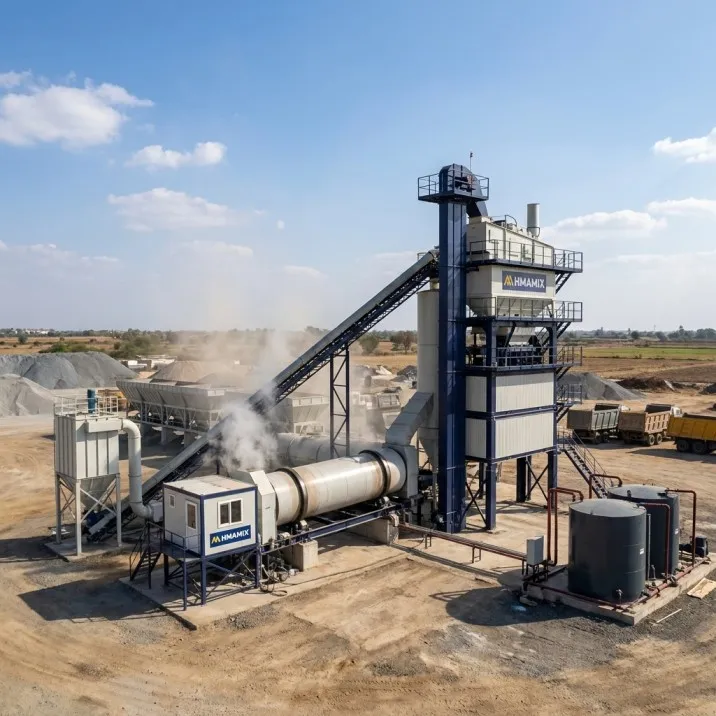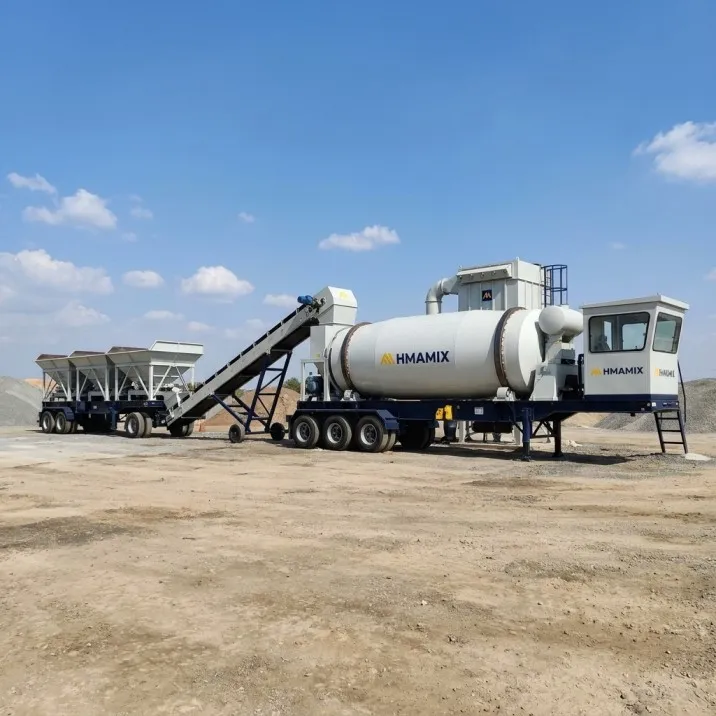
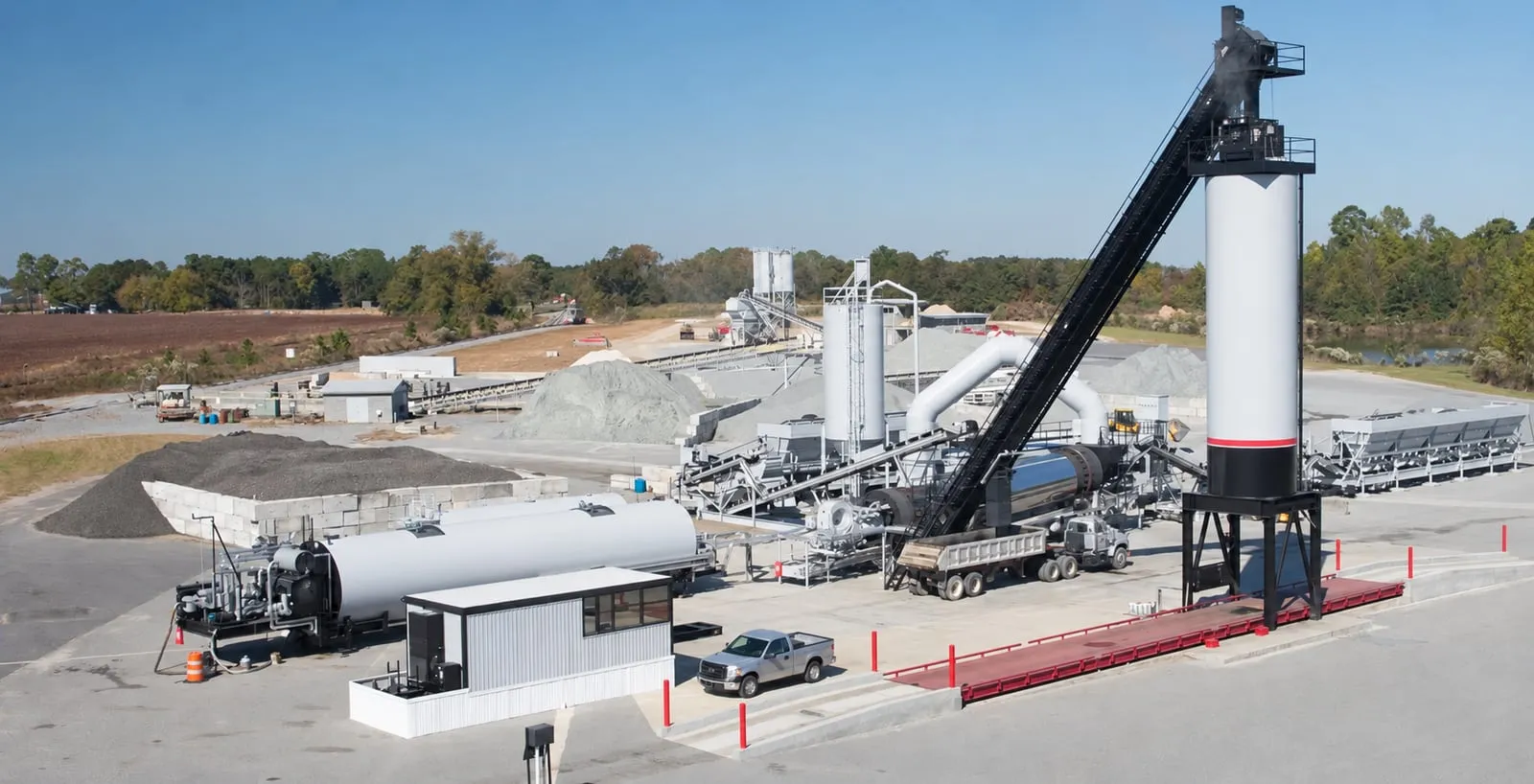
Short answer: an asphalt drum mix plant produces asphalt continuously. Aggregate is dried in the burner end of a rotating drum and coated with hot bitumen further along the same drum, so drying and mixing happen in one pass. It has fewer machines than a batch plant, which keeps the structure simple and maintenance straightforward.
How a drum plant works
- Cold feed bins meter each aggregate size continuously; a belt scale reports the total flow to the control system. Details: cold feed system.
- Drum, drying and mixing zones: aggregate dries near the burner and is coated with bitumen further along. Details: drying drum, burner and fuel.
- Bitumen dosing: a metering pump adds hot bitumen in step with the measured aggregate flow.
- Dust collection: the drum exhaust is cleaned in a dust collector before the stack. Details: baghouse dust collection.
- PLC control keeps aggregate feed, bitumen rate and burner output in balance as production changes.
Where drum plants fit — and where they do not
| Your project | Drum plant |
|---|---|
| Long runs of one standard mix | Good fit: steady output, few moving parts |
| Remote sites, mines and industrial yards far from commercial asphalt | Good fit: produce on site and avoid long hot-mix hauls |
| Frequent recipe changes or very tight specifications | Consider a batch plant instead |
| Polymer-modified or fibre mixes | Possible, but discuss the dosing point with our engineers first |
The honest trade-off: a drum plant gives up per-batch weighing and hot screening. In return you get a simpler plant. If your specification asks for batch records, choose batch.
The two HMAMIX drum series
| Series | Type | Models | Capacity | Best for |
|---|---|---|---|---|
| HMA-DS | Stationary | HMA-DS40 to HMA-DS200 | 40–200 t/h | Long-term continuous production of standard mixes with low maintenance cost |
| HMA-DM | Mobile (trailer) | HMA-DM40 to HMA-DM200 | 40–200 t/h | Short projects and scattered sites that need continuous output and fast relocation |
Both are ISO, CE and EAC certified, carry a 15-month warranty and can be configured for heavy oil, natural gas or coal powder.
What to prepare before asking for a quotation
- Required output and the mix you will run most of the time.
- Aggregate sizes, moisture and how many bins you need.
- Fuel and bitumen supply at the site.
- Whether the plant stays put or moves between projects.
Send them through the quotation form. More on how we plan a plant: project planning.