
Dust control & emissions
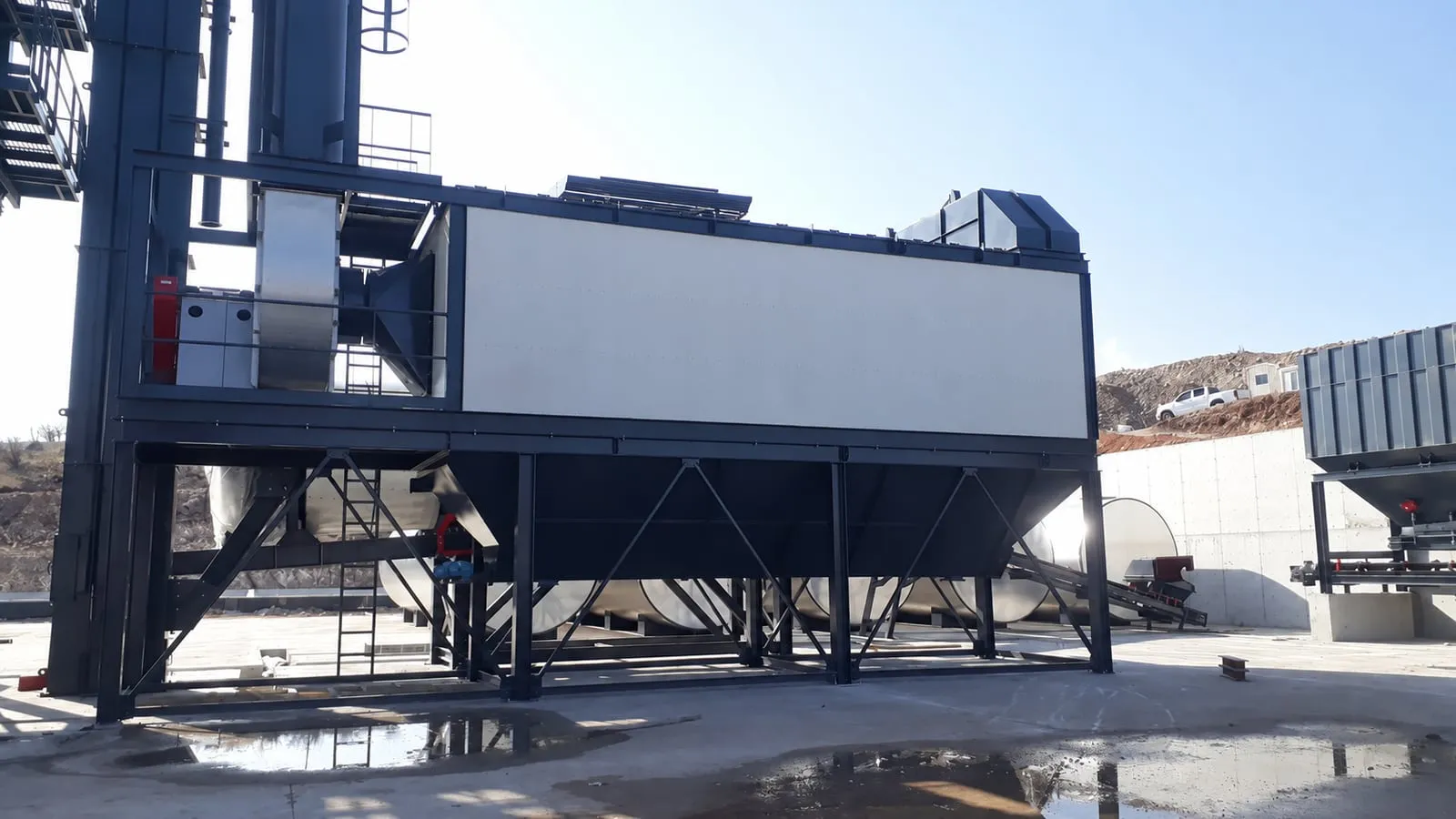
Baghouse and dust control
Bag filters and local extraction that keep dryer exhaust and plant dust under control.
The dryer exhaust carries fine dust. A primary separator removes the coarse part, then bag filters capture the fines before the exhaust fan sends clean gas to the stack. Collected dust can return to the mix as filler.
Dust from the screen, scales and filler transfer is captured by local hoods and ducts. Bitumen fumes are a different problem: a baghouse removes particles, not fumes or odour.
How it works
- 01
Primary separation
Coarse dust drops out of the exhaust stream.
- 02
Bag filtration
Filter bags capture fine particles.
- 03
Bag cleaning
Pulses of air knock the dust off the bags.
- 04
Exhaust
The fan draws gas through the system and out of the stack.
- 05
Dust handling
Collected fines go to the reclaimed dust silo.
Common configurations
Stationary baghouse
Beside the tower for fixed plants.
Trailer-mounted baghouse
For mobile plants.
Local extraction
Hoods and ducts at screens, scales and filler transfer.
Tell us before we quote
- Emission limits in your permit
- Fuel type (it affects condensation and bag life)
- Whether reclaimed dust will be reused
Check before ordering
- Exhaust temperature and condensation protection for the bags
- Spark protection when burning heavy fuels
- Bitumen fume control, if required, planned separately
Questions
Does a baghouse remove bitumen fumes?
No. It removes dust particles. Fumes from tanks, the mixer and truck loading need their own capture and treatment if your permit requires it.
Related
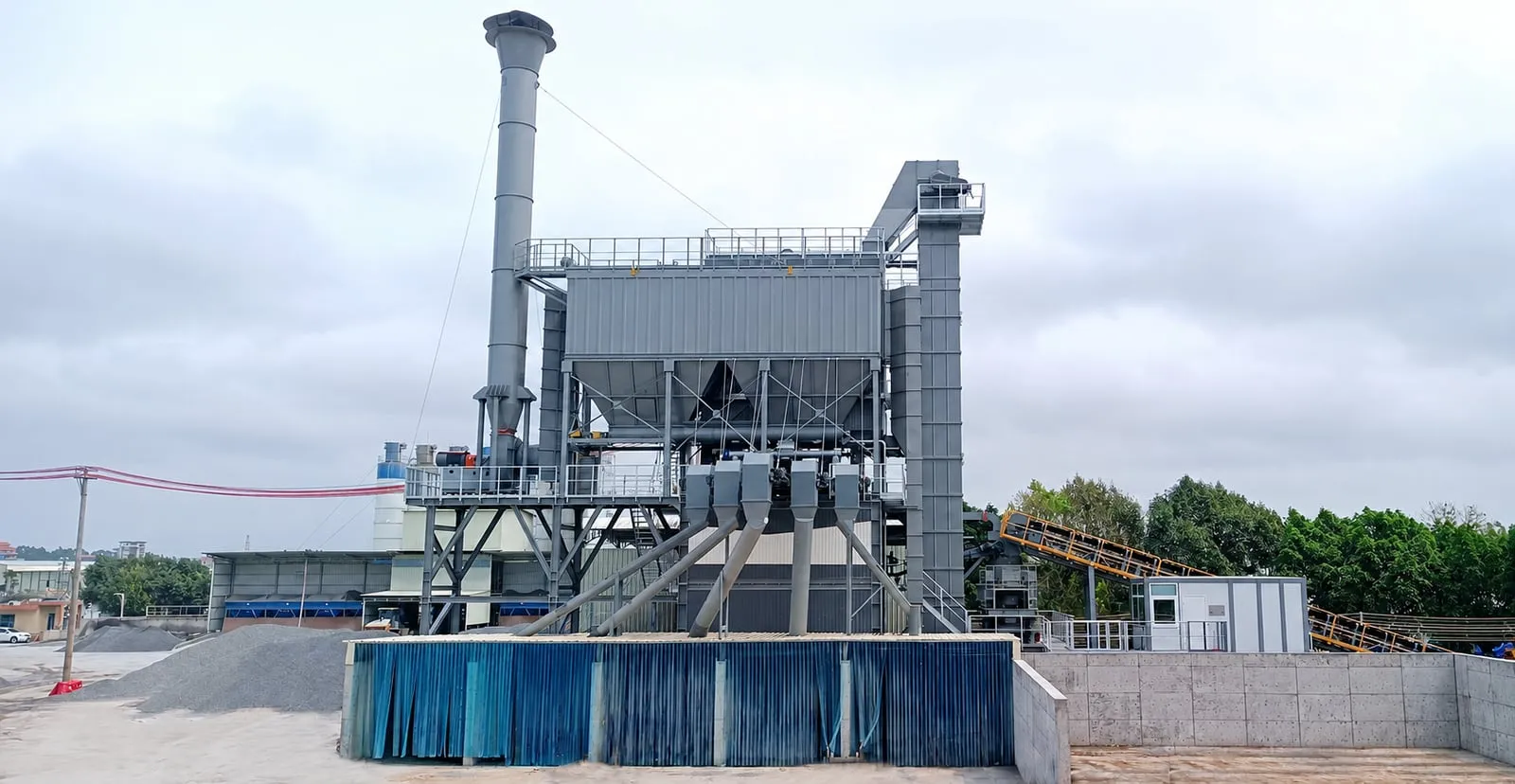 Enclosed plantCladding and enclosures around the noisiest and dustiest parts of the plant for sites with strict permits.
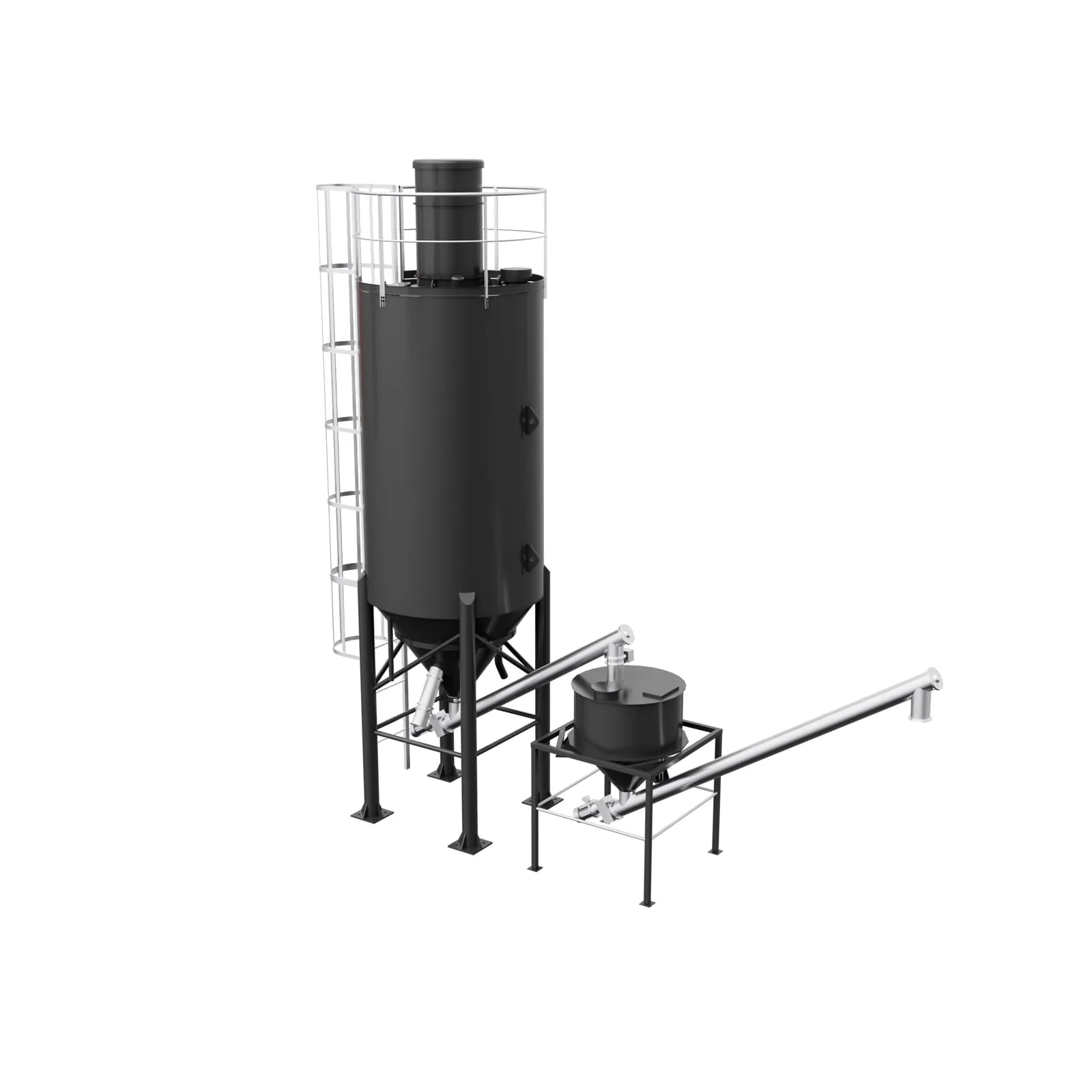 Filler & additive systemsSeparate storage and feeding for new filler, reclaimed dust and mix additives such as fibres.
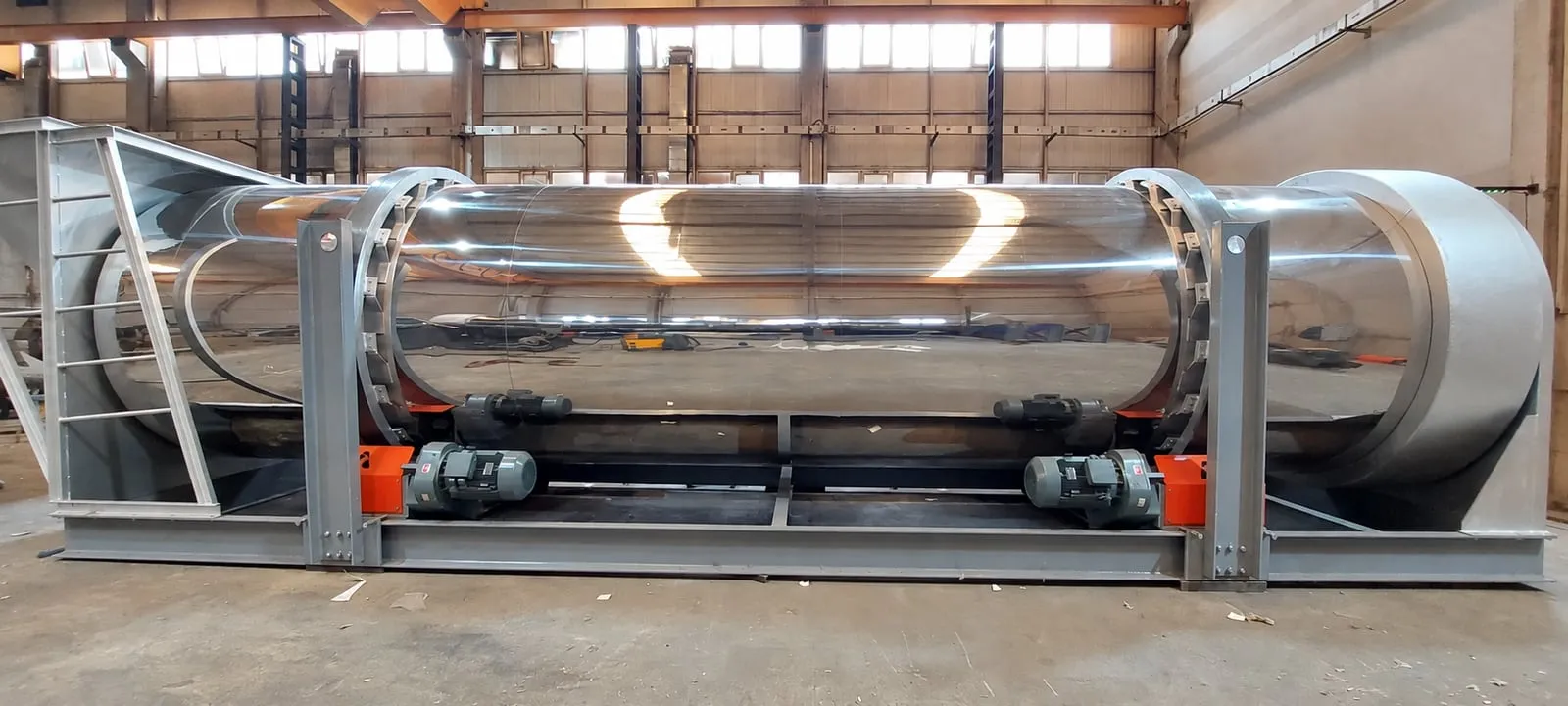 Drying drumThe rotating drum that removes moisture and heats aggregate to mixing temperature before it goes to the screen.
Tell us about your project
Share your required capacity, site location and fuel type — our engineers will recommend a suitable plant configuration.