
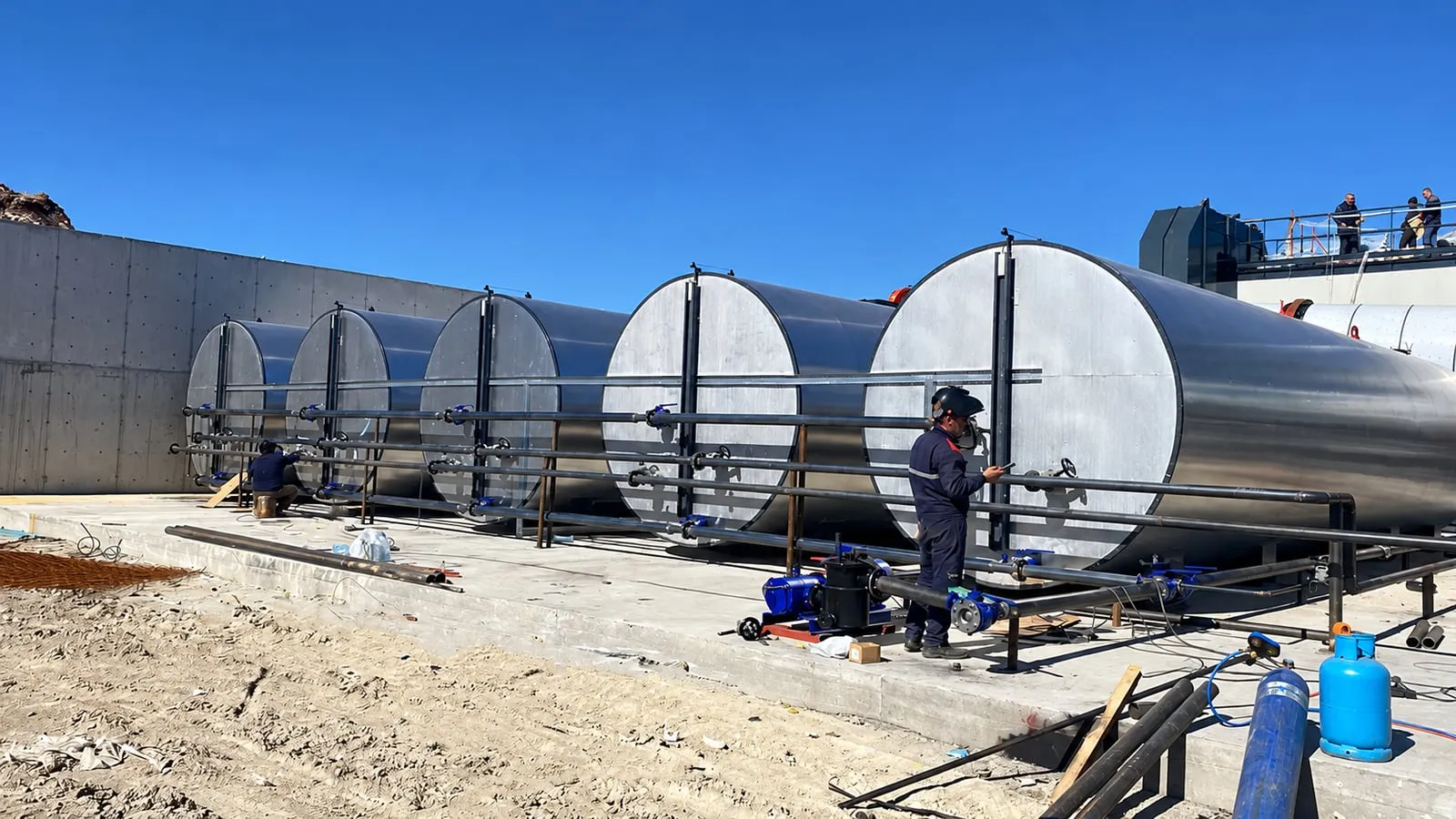
Bitumen storage & processing
Bitumen storage tanks and heated pumping
Insulated tanks, heated pipes and jacketed pumps that keep bitumen hot and moving from delivery to the scale.
Bitumen must stay hot enough to pump from the moment it is unloaded until it is weighed. Tanks are insulated and heated, usually by thermal oil, and pipes and pumps are jacketed so nothing freezes in the lines.
How much storage you need depends on your daily consumption and how often deliveries arrive — not on a fixed number of tanks per plant.
How it works
- 01
Unloading
Tankers discharge through a heated inlet; drummed bitumen comes from a decanter.
- 02
Storage
Insulated tanks hold bitumen at pumping temperature.
- 03
Circulation
Pumps keep bitumen moving between tanks and the plant.
- 04
Supply to the scale
A jacketed line feeds the bitumen scale or meter.
Common configurations
Horizontal tanks
Easy to transport and install in rows.
Vertical tanks
Large volume on a small footprint.
Jacketed pumps and valves
Heated by thermal oil to prevent blockages.
Tell us before we quote
- Binder grades you store (separate tanks for each)
- Daily consumption and delivery interval
- Delivery by tanker, drums or bags
Check before ordering
- Level, temperature, overflow and venting on every tank
- How lines are emptied at shutdown
- Tank foundations and bund walls by the owner
- Heating load matched to the thermal oil heater
Questions
How many bitumen tanks does my plant need?
One per binder grade at minimum, with total volume covering your consumption between deliveries plus a margin. We calculate it from your figures.
Related
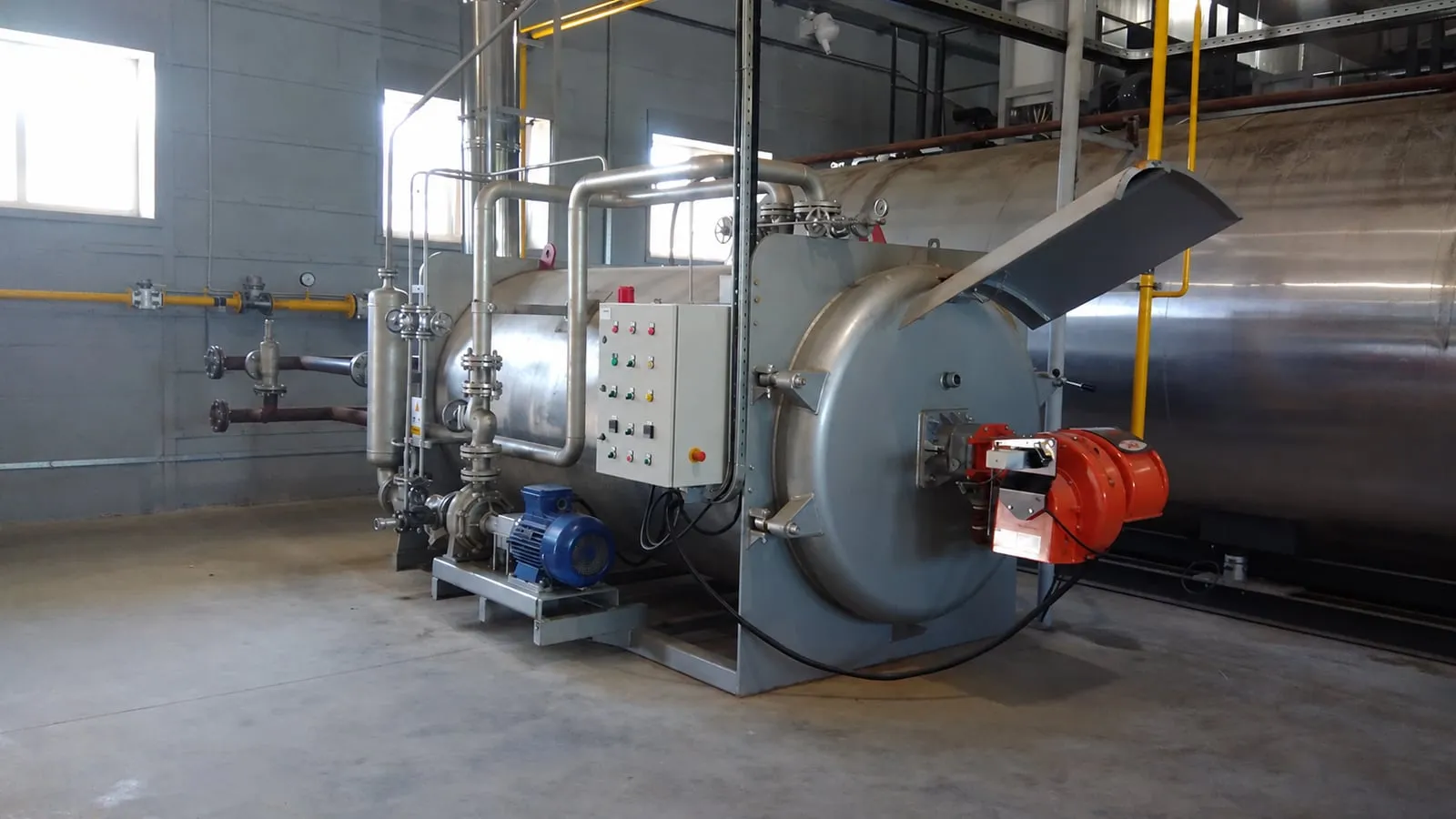 Thermal oil heaterThe heater and pumps that circulate hot oil to every bitumen tank, pipe and pump in the plant.
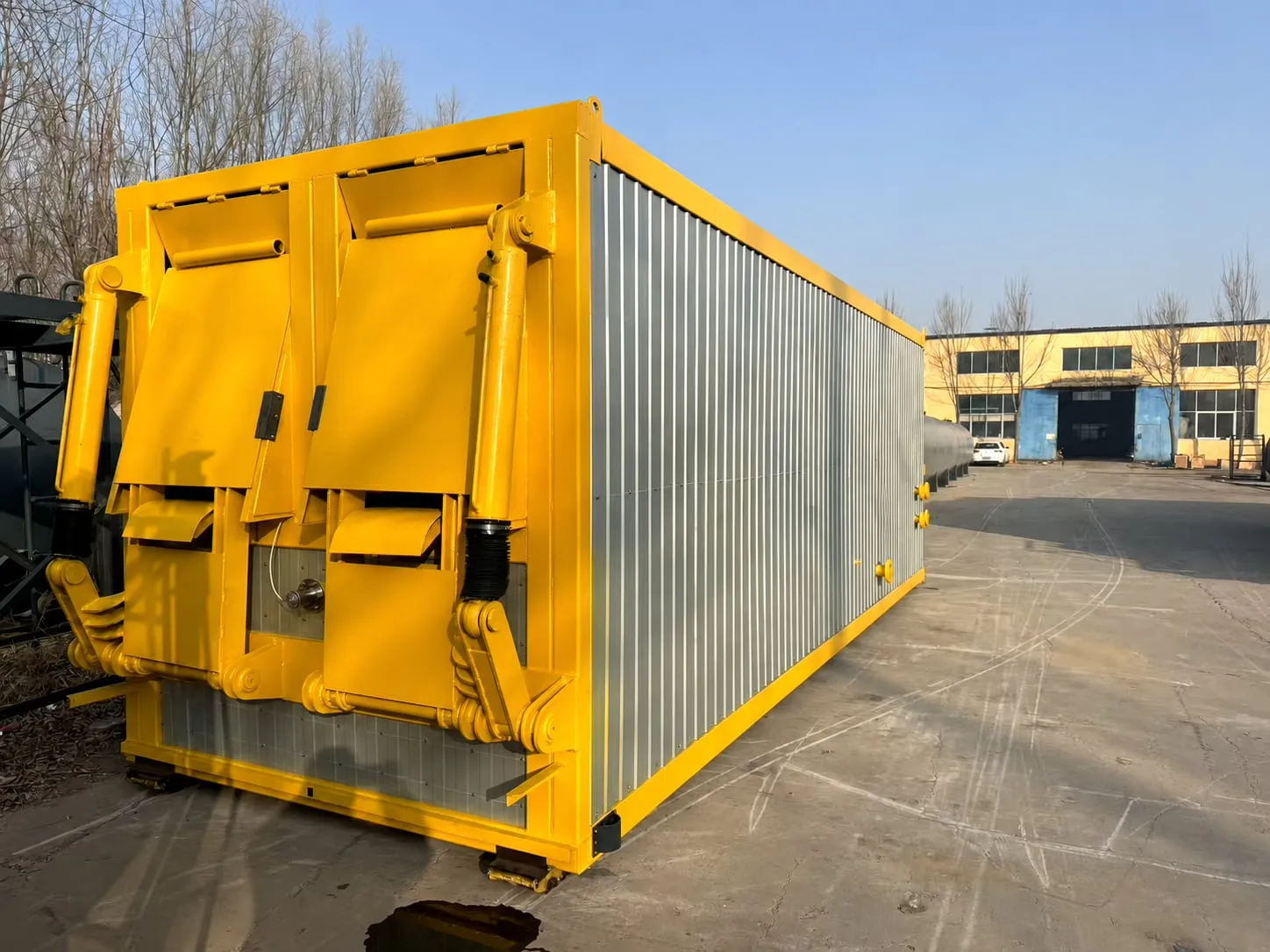 Bitumen decanterA heated chamber that melts bitumen out of drums or bags where hot bulk bitumen is not available.
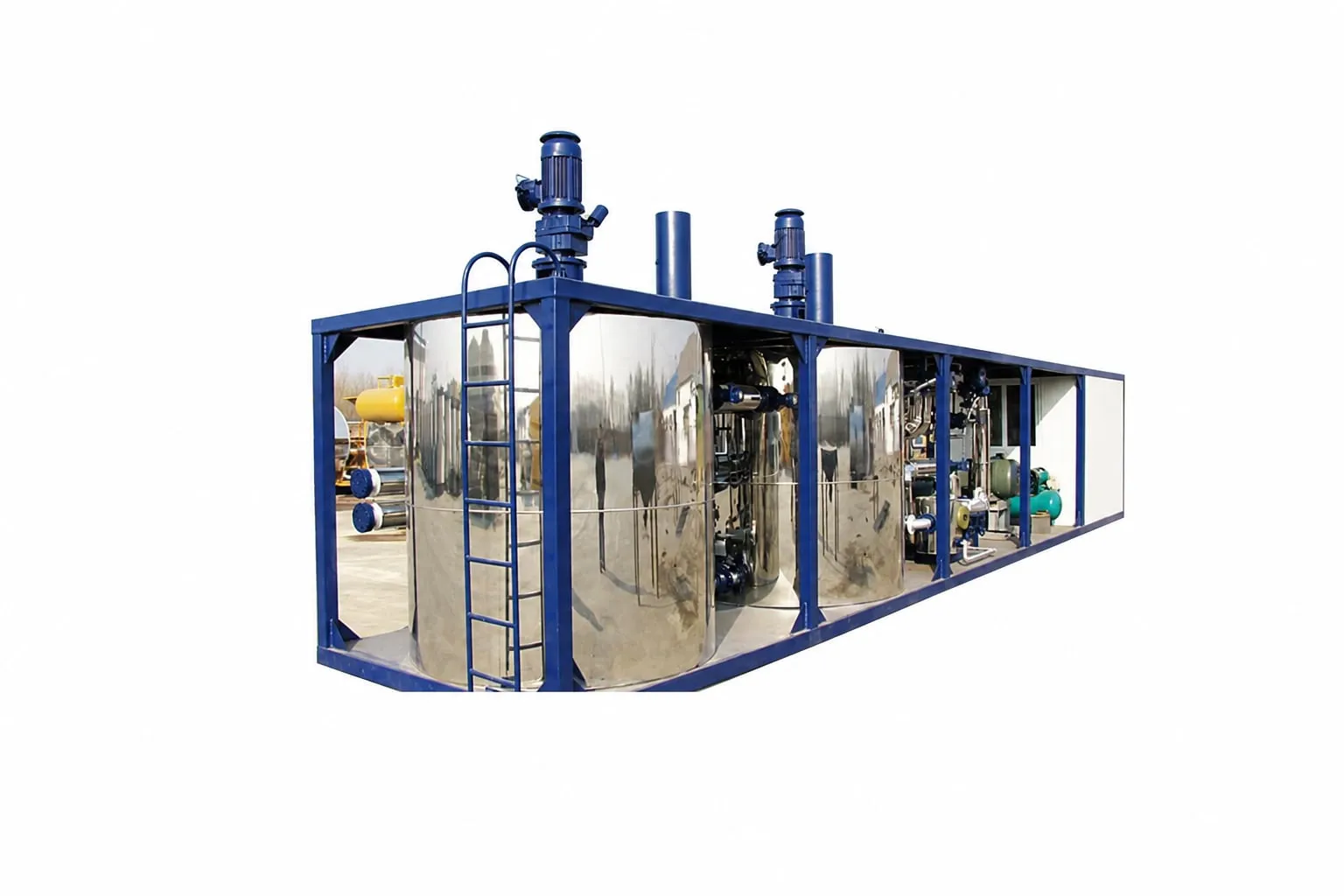 Modified bitumen plantEquipment to produce polymer modified bitumen (PMB) on site instead of buying it ready-made.
Tell us about your project
Share your required capacity, site location and fuel type — our engineers will recommend a suitable plant configuration.